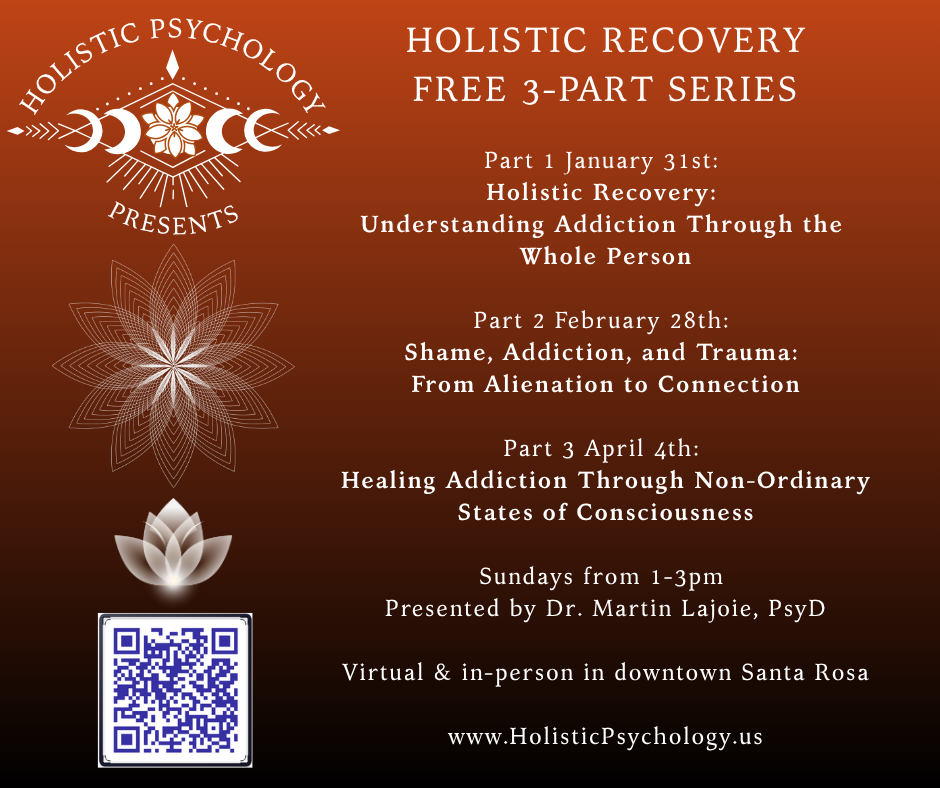
Holistic Recovery 3-Part Series
Part 1: Holistic Recovery: Understanding Addiction Through the Whole Person
Part 2: Shame, Addiction, and Trauma: From Alienation to Connection
Part 3: Healing Addiction Through Non-Ordinary States of Consciousness
Sunday January 31st 1-3pm: Holistic Recovery: Understanding Addiction Through the Whole Person
Addiction affects, and is affected by, the whole person. Trauma, chronic stress, physical health, emotional well-being, relationships, and a sense of meaning can all play a role in recovery.
This seminar introduces a trauma-informed, integrative approach to understanding addiction that looks beyond the substance itself. We’ll explore practices that support the body, nervous system, mind, emotions, relationships, and overall well-being.
Participants will learn a simple framework for understanding the many approaches available today, from mindfulness and movement to nutrition, body-based practices, psychotherapy, and other complementary approaches. We’ll also take a clear-eyed look at what research supports, what remains uncertain, and how to think critically about popular ideas such as polyvagal theory.
The goal is to provide a practical framework for understanding recovery as a whole-person process, and resources for continuing to learn and explore.
Sunday February 28th 1-3pm: Shame, Addiction, and Trauma: From Alienation to Connection
Shame plays a powerful role in addiction and trauma, yet it is often misunderstood or overlooked. In this seminar, we’ll explore what shame is, how it shows up in recovery, and why attempts to “talk someone out of” shame often don’t work.
We’ll look at the difference between shame and guilt, the ways shame can develop, and how relationships, community, and a sense of belonging can help heal it. We’ll also explore how treatment approaches and everyday interactions can unintentionally deepen shame, and what helps instead.
Drawing from trauma-informed approaches, including Compassion Focused Therapy, Acceptance and Commitment Therapy, Internal Family Systems, EMDR, Motivational Interviewing, and somatic practices, this seminar offers practical ways to move from shame and isolation toward greater self-compassion, connection, and recovery.
Sunday April 4th 1-3pm: Healing Addiction Through Non-Ordinary States of Consciousness
Throughout history, cultures around the world have used non-ordinary states of consciousness in healing, spiritual practice, and personal transformation. Today, researchers and clinicians are exploring whether these states may also have a role in addiction recovery.
In this seminar, we’ll explore the emerging field of psychedelic-assisted psychotherapy alongside non-drug approaches that can produce altered or non-ordinary states of consciousness. We’ll consider how these experiences may help people address trauma, emotional pain, patterns of addiction, and the deeper questions that can arise in recovery.
We’ll look at what is currently known, what remains uncertain, and the potential benefits and challenges of working with these experiences. The seminar will also provide resources for anyone interested in learning more about this rapidly developing area.
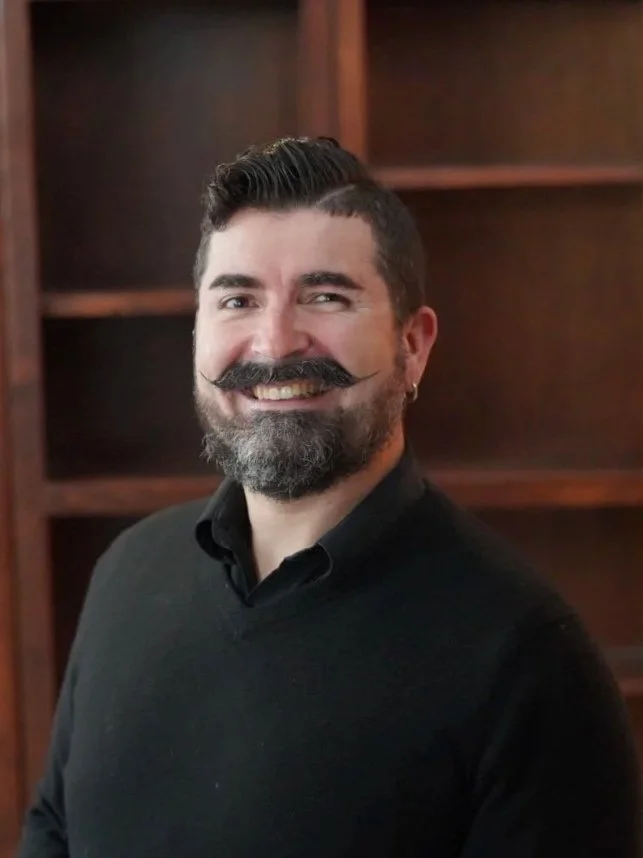
Dr. Martin Lajoie, Psychologist, PsyD
Dr. Marty Lajoie, PsyD (“DocMarty”) is the founder and director of Holistic Psychology Inc. an integrative mental health therapist group practice in Santa Rosa, CA. He has also worked for the past decade in psychological leadership at Duffy’s Napa Valley Treatment, an integrative treatment center for substance addictions in Calistoga. For several years, he helped developed and direct Ketamine-Assisted Psychotherapy programs at Be The Change in Mental Health and Window’s Health Clinic in Sonoma County. He earned his Masters and Doctorate in clinical psychology from California Institute of Integral Studies in San Francisco. There, he conducted dissertation research in the psychedelic sciences for treating substance use disorders. He underwent intensive post-graduate certification training with Multidisciplinary Association for Psychedelic Sciences (MAPS) in MDMA assisted psychotherapy for treating Post Traumatic Stress Disorder, as well as Ketamine Assisted Psychotherapy training with Polaris Insight Center. He underwent post-doctoral training in Internal Family Systems (IFS), Dialectical Behavioral Therapy (DBT), Motivational Interviewing (MI), Eye Movement Desensitization & Reprocessing (EMDR), Brainspotting, and Nonviolent Communication (NVC) as well as certification in Integrative Mental Health and Neurodynamic Breathwork facilitation. In the decade prior to psychology, Marty worked as residential care counselor at County of Sonoma’s child protective services shelter. In the decade prior to that, he produced (and musically performed at) large-scale events in the bay area electronic dance music scene. In his personal life, Marty has been a consistently active & contributing member of addiction recovery support group communities since 2004. This, in particular, inspired him to further his education and professional development in the human helping fields and become the psychologist he is today.